Sunday, February 5, 2017

Advice: How Should I Choose a Flashlight? Part 1

In addition to camping stoves, I love flashlights. I definitely have more flashlights than I need, but I can’t stop collecting them. Irrespective of my obsession, flashlights make up an important part of anyone’s outdoors kit, prepper stockpile or survival equipment list. For some, the question becomes, how do I choose the “best” flashlight for me?

Flashlight Overview

Before explaining how to choose the right or best flashlight, let me first explain that no single flashlight will do everything perfectly. There’s a saying in the flashlight community (yes, there really is a community): “run time, size and brightness – pick any two.”

In other words, if you want a small and bright flashlight, it’ll have a correspondingly short run time. If you want a flashlight with a long run time that’s really bright, it won’t be small. I could go on, but I think you get the picture. Now that that’s out of the way, we can get on with how to choose a flashlight.

There are basically two types of flashlights on the market today: incandescent and LED (LED is short for light emitting diode). These terms refer to the way the flashlight produces light.

An incandescent flashlight produces light be running electricity through a filament.

Caption: A typical incandescent flashlight bulb

An LED flashlight works through the principle of electroluminescence. Basically, electricity is run through a semi-conductor in a particular way to produce light.

 Caption: An example of an LED flashlight (one of the older Mag-Lite LED models)


There’s at least one other type of flashlight technology that’s available, called HID or high-intensity discharge. However, with they’re not very common these days, especially given the recent advances in LED technology.

Comparing Flashlights

There are three primary ways to analyze the performance of a flashlight.

The first is the intensity of the light produced. Common units of measure include candlepower (not used that often anymore), candela and lux. For the rest of this blog, we’ll just use candela. The second is the amount of light produced and this is usually measured in lumens. The third is the run time you get from the flashlight and this is usually measured in hours.

As you can imagine, the more candela, lumens and run time your flashlight gets, the better. But recall, to increase the performance of one of these ways characteristics, you have to sacrifice another characteristic. But is there a flashlight that provides the best performance overall? Yes, there is, and it’s almost always going to be the LED flashlight. Let’s now compare LED versus incandescent flashlights.

Incandescent Flashlight Advantages

- Produces a warmer, more pleasing color to the human eye
- Generally cheaper than a similar LED flashlight

Incandescent Flashlight Disadvantages

- Not as efficient as a comparably sized and priced LED flashlight
- Bulb life is a lot shorter than an LED
- Except for specialized flashlights (like older versions of SureFire WeaponLights), incandescent bulbs are far less shock resistant than LEDs

LED Flashlight Advantages

- Massively more efficient than an incandescent flashlight. Comparing two similar flashlights in terms of size and design, the LED one will probably have at least four times the candela, 10 times the lumens and three times the run time.
- Practically shock proof
- Usually will produce less heat (although this might be a disadvantage in cold weather when you have cold hands)
- Today, LED flashlights are much easier to find
- Extremely long bulb life, usually in the tens of thousands of hours.

Incandescent Flashlight Disadvantages

- The color of the light is very “harsh” like fluorescent lights, so what you’re looking at will look a little “washed out” or bland.
- LED technology is advancing so fast, the most advanced LED flashlight today will probably be “outdated” in a year or so. This is probably only a disadvantage for those who must have the most advanced technology at all times.

As you can see, an LED flashlight is probably going to be the better choice. There will be exceptions to this, especially for old school flashlight enthusiasts, hobbyists, collectors and photographers. But for the everyday person, camper, soldier, emergency response operator or survivalist, LED will be the better choice 99.9% of the time.

In the next blog, we’ll look at different flashlight types, such as keychain, handheld, lantern, headlamp and spotlight.

Any thoughts and questions are welcome.

Tuesday, January 31, 2017

Discussion: Different Versions of Biolite’s Portable Grill

So one of the neat features of Biolite’s CampStove and CookStove is that they can use Biolite’s Portable Grill. In fact, my desire to have a wood stove that can grill is one of the main reasons I’m interested in Biolite’s stoves. However, I read a reddit comment about how there are at least two versions of the Portable Grill on the market today.

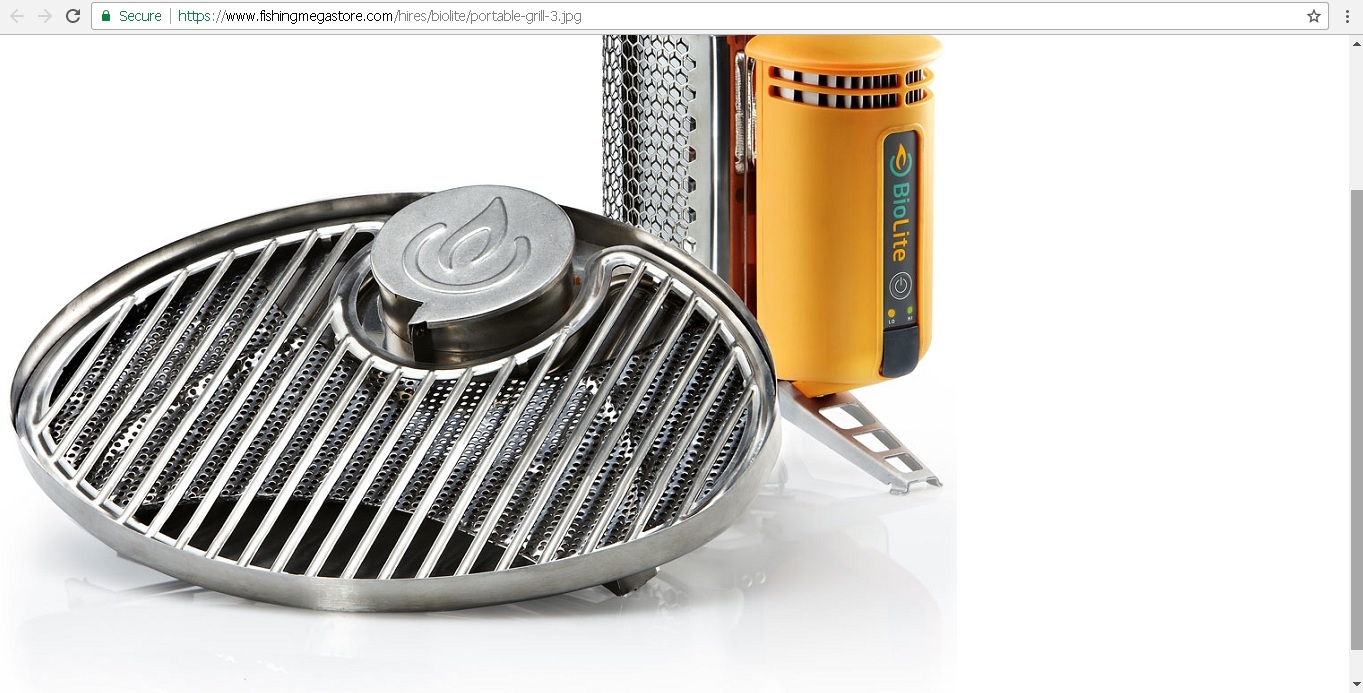
Here’s a screen shot showing one version:


Now here’s a screen shot showing the other version:


What do you notice that’s different between the two? At least one difference is the actual grilling surface.

In the first picture, the grill itself has round wires or rods and is made up of multiple pieces of metal attached in some way. In the second picture, it looks like the grilling surface is one giant piece of metal that’s been stamped from a metal sheet and bent into form.

Has anyone else noticed this difference? I’d like to know and/or discuss several things. 

First, is the wire version is sturdier and easier to clean than the stamped version?

Second, are there any other differences between the two types of Portable Grills?

Third, if I bought a Portable Grill today, which version would I get? Assuming the wire version is superior to the stamped version with respect to durability and ease of cleaning, my cynical self thinks I’d get the stamped version. But my optimistic, Biolite loving self says I’d get the wire version. This is begs the question: what kind of company is Biolite? A company that tweaks its product to improve it or to make it cheaper?

Any of you readers out there have any thoughts, comments or personal experiences with one or both version of the Portable Grill?

EDIT: According to REI's website as of 10am on 2/5/2017, the Portable Grill that comes in the new Campstove 2 bundle appears to be the "round wire/rod" version. This supports the conclusion that this is the updated or revised version and is what's currently being sold by Biolite.

Thursday, January 26, 2017

Preview: Solo Stove Bonfire

Attribution: Solo Stove (https://www.kickstarter.com/projects/340672218/solo-stove-bonfire-the-worlds-most-unique-fire-pit)

I love my Solo Stove Lite. It’s so simple, yet produces such an efficient flame. There’s also the fact that its fuel is free, which facilitates its low cost of operation. Given its popularity, Solo Stove has released larger versions, including the Titan and Campfire. You can see a comparison of these three stoves, below:

Caption: Size comparison of the Lite, Titan and Campfire stoves.
Attribution: Solo Stove (https://www.solostove.com)

Looks like Solo Stove is at it again, with a new stove that is continuing the trend of even larger fire machines. After a successful Kickstarter campaign, the Bonfire is almost ready for official release. As of the time of this writing, Solo Stove anticipates it’ll be released by the end of February 2017 at a cost of $289.99. It’s my understanding that a handful of backers have already received their Bonfires and the reviews so far seem to be good.

So What’s Special About the Bonfire?

Solo Stove advertises the Bonfire as “the worlds [sic] most unique fire pit” and I think that description fits nicely. Basically, the Bonfire is just a much larger version of the Lite, Titan and Campfire and works the same way, as “a natural convection inverted downgas gasifier stove.” Officially, the Bonfire is not intended to be used for cooking, although roasting hot dogs and marshmallows are officially approved by Solo Stove.

Attribution: Solo Stove (https://www.kickstarter.com/projects/340672218/solo-stove-bonfire-the-worlds-most-unique-fire-pit)

The official specifications state the Bonfire is 14 inches high and 19.5 inches wide, weighs 20 pounds and is made of 304 stainless steel, just like its little brothers. However, unlike the Lite, Titan and Campfire, the Bonfire does not use any nichrome wire. You can see the differences below:

Caption: Top view of the Bonfire. Note the stainless steel bottom, with no nichrome wire.
Attribution: Solo Stove (https://www.solostove.com)

Caption: The top view of the Titan. Note the nichrome wire bottom.
Attribution: Solo Stove (https://www.solostove.com)

Things I’m Curious About

Do I anticipate buying the Bonfire? Not anytime soon, but I want to get one eventually. My wife and I have discussed buying or building a fire pit in our backyard for a while now and I think this is an interesting possibility. It’s one of more expensive portable fire pits available, but I think the price is worth it; you’re definitely getting what you pay for. Given my experiences with my Solo Stove Lite, I anticipate the Bonfire will last forever, with minimum maintenance required.

What will be a major deciding factor as to whether or not I get the Bonfire is how well it can be used for cooking. I really want to be able to grill with the Bonfire, although given its size, it may not be more advantageous than using my outdoor charcoal grill.

My guess is a simple grate that’s elevated high enough over the Bonfire will work, or using a tripod or rotisserie will work as well. But will the Bonfire perform better (from a cooking perspective) than a typical open fire? That remains to be seen, although some of you out there who are more experienced with open fire cooking can give us some insight. I think one of the biggest advantages of the Bonfire will be its efficiency. According to Solo Stove, 20 pounds of wood will turn into only 5 ounces of ash.

What are your thoughts? Feel free to comment.

Saturday, January 21, 2017

Preview: Upcoming Biolite CampStove 2?

So I’m really into wood camping stoves, like the Solo Stove, EmberLit, Biolite and the like. I think the idea of being able to find your own fuel, or at the very least not have to pay for it (it’s always great to save money!), is intriguing and reassuring.

Then there’s the fact that you’re cooking with fire and I find that very appealing. It’s a lot of fun to have your pile of sticks and sit back and just feed the fire, one stick at a time, enjoying its warmth and primal elegance.

Anyways, back to the Biolite CampStove 2. It appears it hasn’t officially been announced, based on the fact that it’s not listed on Biolite’s official site. However, a recent online search brought me to REI’s website a few days ago, and this is what I found:


Note that as of the writing of this blog post, the CampStove 2 is no longer listed on REI’s website.

These are screen shots I took the other day. I posted them on a reddit thread to see if anyone had any information about this upcoming product, but nothing of note so far.

Based on the product detail, it looks like the battery has about 4 times the capacity, the fan has 4 settings instead of 2 and the USB charging ability is now at least “50%” improved.

About this last point, what does it mean exactly? Does it mean you can charge your electronics at 600mah? If so, is that sustained current? Or just peak? I’m assuming it’s the sustained charging current. So along with a bigger onboard battery, perhaps the CampStove 2 will have the ability to realistically charge your electronics. And with such a large onboard battery, the CampStove 2 might be able to serve as a power bank, so you don’t have to constantly feed your fire every few minutes.

Another great feature I like about the CampStove 2 is the 4 fan speeds. In theory, it will allow greater control of your cooking. Anyone out there have the CookStove and the original CampStove and can compare how much “better” having 4 fan speeds instead of 2 is?

I debated getting the CookStove, but I hate the idea of having limited fan run time. That means I’d potentially have to carry some external power source, like a battery pack, power bank or solar cell set up, which theoretically defeated the purpose of having a Biolite stove (in my opinion, of course).

Much of the criticism of the original CampStove was that its charging ability was very slow and required constant fire feeding. I believe a Biolite executive is quoted as saying how this charging ability was never intended to be the primary feature of the CampStove. This makes sense, given the small battery on board the original CampStove (I think it’s around 650mah). I’m betting the battery was to serve as a buffer between the thermoelectric generator (TEG) and the fan motor.

The original CampStove ‘s marketing “strategy” was a double edged sword. It’s charging ability got it a lot of attention, yet also created unrealistic expectations of its users. Perhaps the CampStove 2 will provide the charging ability its users demand. We can only wait and see.

What are your thoughts? Feel free to comment.

EDIT: As of 7:30pm (EST) on 1/21/2017 the CampStove 2 is listed on Best Buy (Canada) Cabela's websites.